
Controlled Environmental Agriculture
Overview
Controlled Environment Agriculture (CEA) and soil-less agricultural production systems—such as aquaponics, hydroponics, and aquaculture—are rapidly expanding industries with strong potential for development in Virginia. However, these industries face key challenges including economic viability, workforce development, and efficiency in labor and energy use. Our work seeks to address these bottlenecks while also supporting small- to mid-scale and urban producers with practical and applied guidance. Core activities include training educators and producers via workshops, tours, and hands-on demonstrations; developing accessible resources such as factsheets, producer guides, and multimedia content; as well as conducting applied research on innovative technologies, system designs, and production methods. Additionally, the program emphasizes workforce development by providing students and stakeholders with experiential learning opportunities and building collaborative networks with university, government, and private partners to strengthen training pipelines and advance production across the state.
HYDROPONICS
Virginia State University currently operates several different hydroponic systems that grow various crops within a 9,000ft2 CEA greenhouse demonstration and research space. Systems include Nutrient Film Technique (NFT), Dutch Buckets, and Drip Irrigation. Plants include leafy greens, herbs, fruiting crops, cut flowers, as well as ginger. Cost-effective automation and control units are also demonstrated as a means to reduce labor costs and increase productivity within these systems. The greenhouse space serves as a living laboratory for applied research, stakeholder education, and student training.
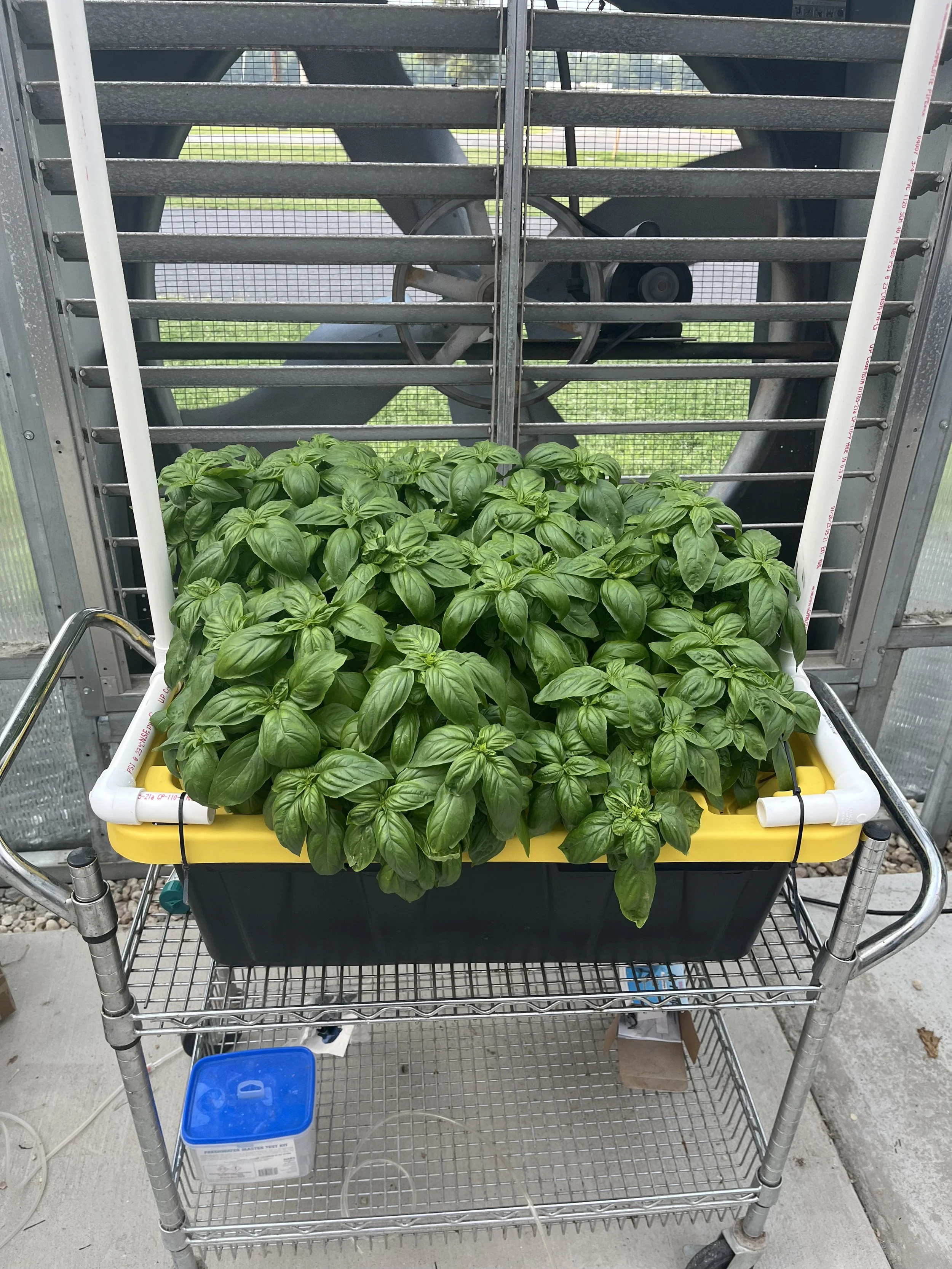
Within the same CEA greenhouse demonstration and research space that houses the hydroponic work, several aquaponic systems are also operating. Systems include Deep Water Culture (DWC), Media Beds, as well as decoupled aquaponic systems. Fish grown within these systems include Tilapia, Striped Bass, Channel Catfish, as well as ornamental fish. Plants include leafy greens, herbs, fruiting crops, non-edible crops, as well as cut-flowers. Cost-effective automation and control units are also demonstrated as a means to reduce labor costs and increase productivity within these systems. The aquaponic systems contained within the greenhouse serve as a living laboratory for applied research, stakeholder education, and student training.
In addition to the CEA greenhouse space, VSU operates 5,000ft2 of indoor laboratory and production space that houses a fish hatchery and Recirculating Aquaculture Systems (RAS) and is used to facilitate further research of soil-less crop production, innovative technology and systems, as well as conduct laboratory analyses to facilitate research and education. In addition to the indoor laboratory and production space, VSU facilitates the Mobile AquaPonics Education and Demonstration Unit (MAP.EDU), which is a mobile indoor learning lab containing aquaponic and hydroponic systems. Currently, MAP.EDU is under renovations but follow this page for updates.
COnnect
e-newsletter
Sign up to receive our weekly e-newsletter and event alerts directly to your inbox.
