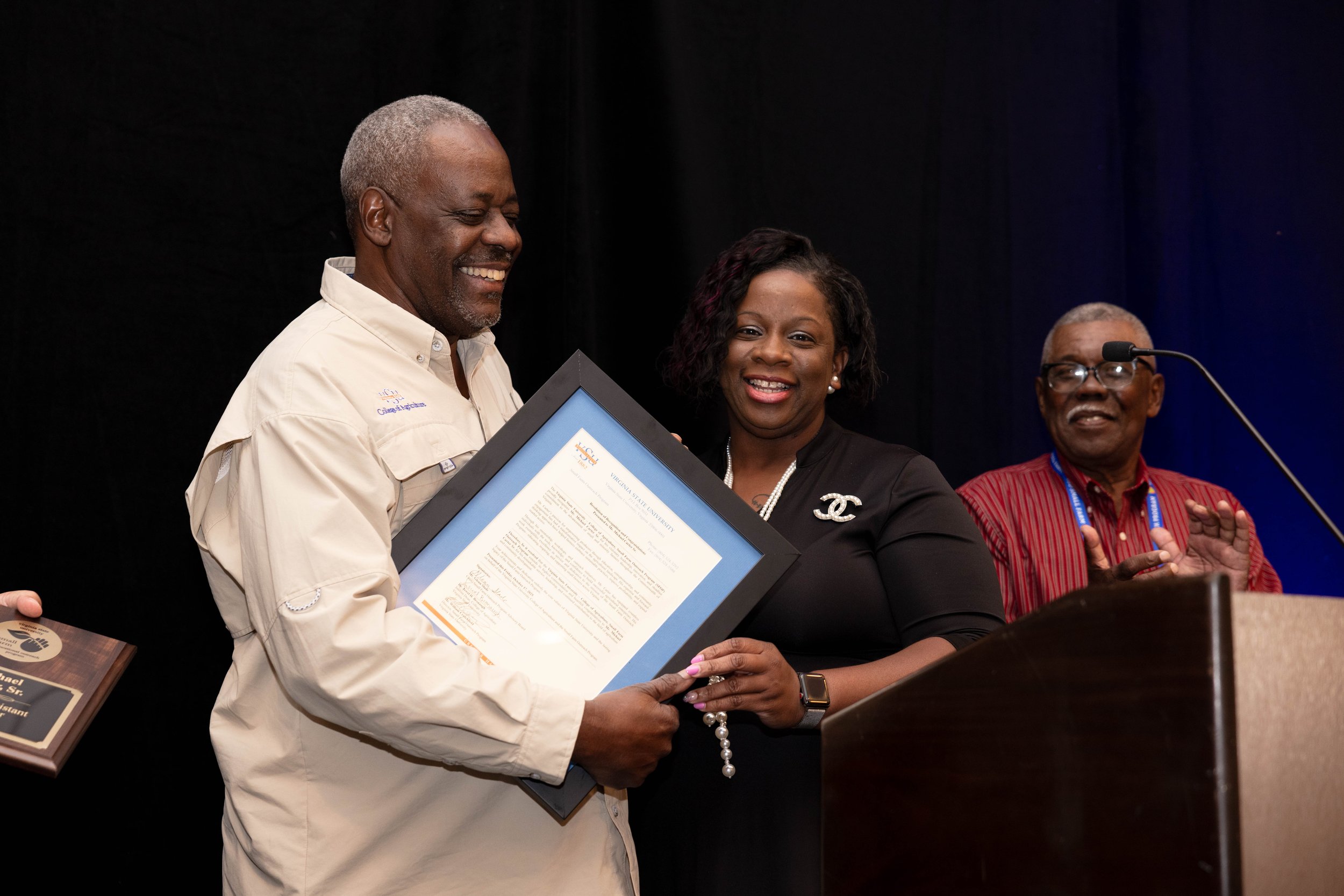
Educational sessions will cover topics relevant to today’s small farmers and ranchers, including marketing, production, finance, food safety, and long-term planning. Attendees can also learn about current research from scientists at VSU’s Agricultural Research Station. “Some of the highlights you can expect will be parasite control, funding sources, specialty mushrooms, and legacy planning,” says SFOP Director William Crutchfield. “We’re going to talk about diversified production from our 43560 project here at VSU’s Randolph Farm, and looking at agriculture finance and asset protection.” The conference will also honor the winners of this year’s Farmer of the Year, Small Farm Agent of the Year, and STAR of the Year awards.
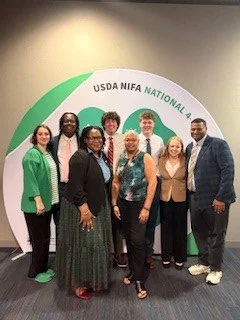
In a historic moment for Extension-based youth development across the nation, two leaders from Historically Black Colleges and Universities (HBCUs) have stepped onto the national stage to guide the future of 4-H. Nicole Swinson of Virginia State University and Teki Hunt of the University of Arkansas at Pine Bluff are the first 1890 HBCU representatives to jointly advise the National 4-H Youth Leadership Team (YLT) for NIFA's National 4-H Conference. This was Hunt's final year serving the YLT, and next year, Swinson will assume her leadership role.