
Ginger, Garlic, and other Specialty Crops
Garlic, ginger and other specialty crops
Virginia State University’s Extension Horticulture program conducts research on high-value crops which can be grown on a limited acreage and may not traditionally be grown in Virginia. These crops offer an opportunity for profitability for Virginia growers, but research-based resources are limited. To deliver valuable information about how these crops perform in Virginia’s unique growing conditions, Cooperative Extension conducts research to determine which varieties, and growing techniques produce high-quality results in our area.
Ginger
A recent needs-assessment survey of Virginia farmers conducted by VSU’s Small Farms program identified ginger as one of the crops that Virginia farmers are particularly interested in, and about which they specifically want more research-based information. One of the most important spices and food additives in use worldwide, ginger also offers a myriad of health benefits because of its anti-inflammatory, anticancer, and antimicrobial properties. Originally from southern Asia, this tropical plant prefers a warm environment with high humidity. While the growing season in Virginia is too short to produce mature shelf-stable ginger that Americans typically see in grocery stores, ginger can be harvested at any point during its growing season. This immature ginger is marketed as “baby ginger” and while it does not have the long shelf life of mature ginger, it is tender and full of flavor. Baby ginger can be grown in open fields and high tunnels in Virginia.
At VSU we’re working to determine which varieties of ginger grow best in Virginia. We’re also conducting research to determine which weed control methods are most economical for Virginia farmers, and which transplanting methods are best for large scale field production. Collaborations between VSU and Virginia farmers to identify methods to produce ginger in Virginia greenhouses for sale as seed pieces for production is ongoing. Local production of seed ginger is critical for long-term success of the crop, because most seed ginger grown in the US is grown by only a few farms in Hawaii, meaning a single unsuccessful season in Hawaii could threated the entire source of seed in the United States. VSU is also collaborating with other universities to explore the possibility of tissue culturing ginger to produce standardized variety seed lines and virus free seed for Virginia farmers and the wider American market.
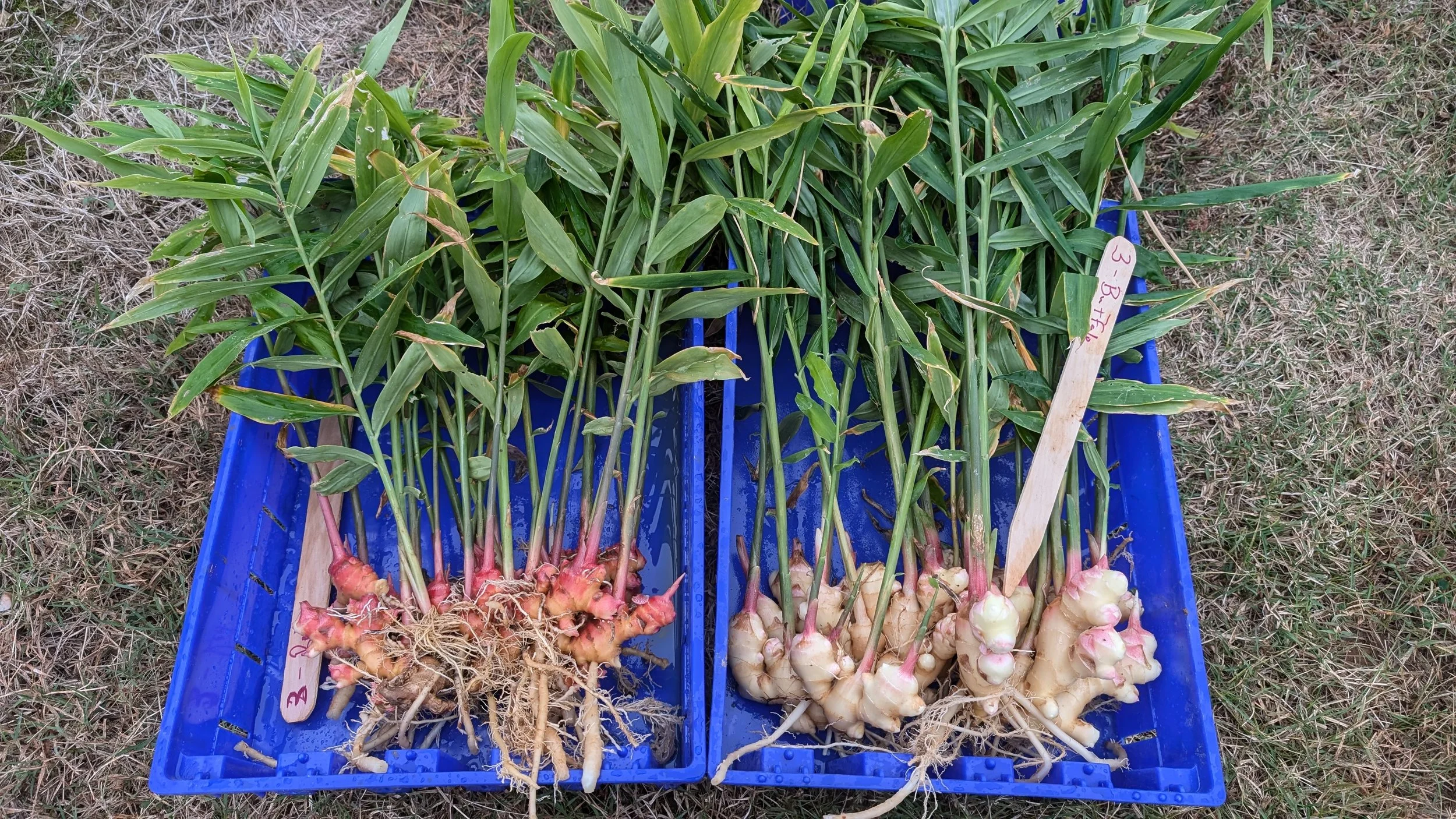
Different varieties of ginger being grown at VSU’s Randolph Farm
Garlic
Garlic is cultivated worldwide, with China and India leading global production, and the United States importing more than it can grow, primarily from China, with Spain, Mexico, and Argentina. Domestically, 90% of the garlic grown in the US is grown in California though it is grown on small farms throughout the country. Mean garlic price per cwt was $50-80 in 2025, but wholesale fresh-market prices can be triple that amount which makes it attractive for fresh-market producers. Garlic is well-adapted for production in all parts of the United States and there is growing interest in garlic cultivation in other regions, including the southeast, to meet local demand and support regional agricultural diversity. Despite this interest, limited research exists on garlic variety performance in the southeastern U.S., where unique climatic conditions, such as high humidity, variable soil types, and variable winter temperatures and rainfall pose challenges to successful cultivation.
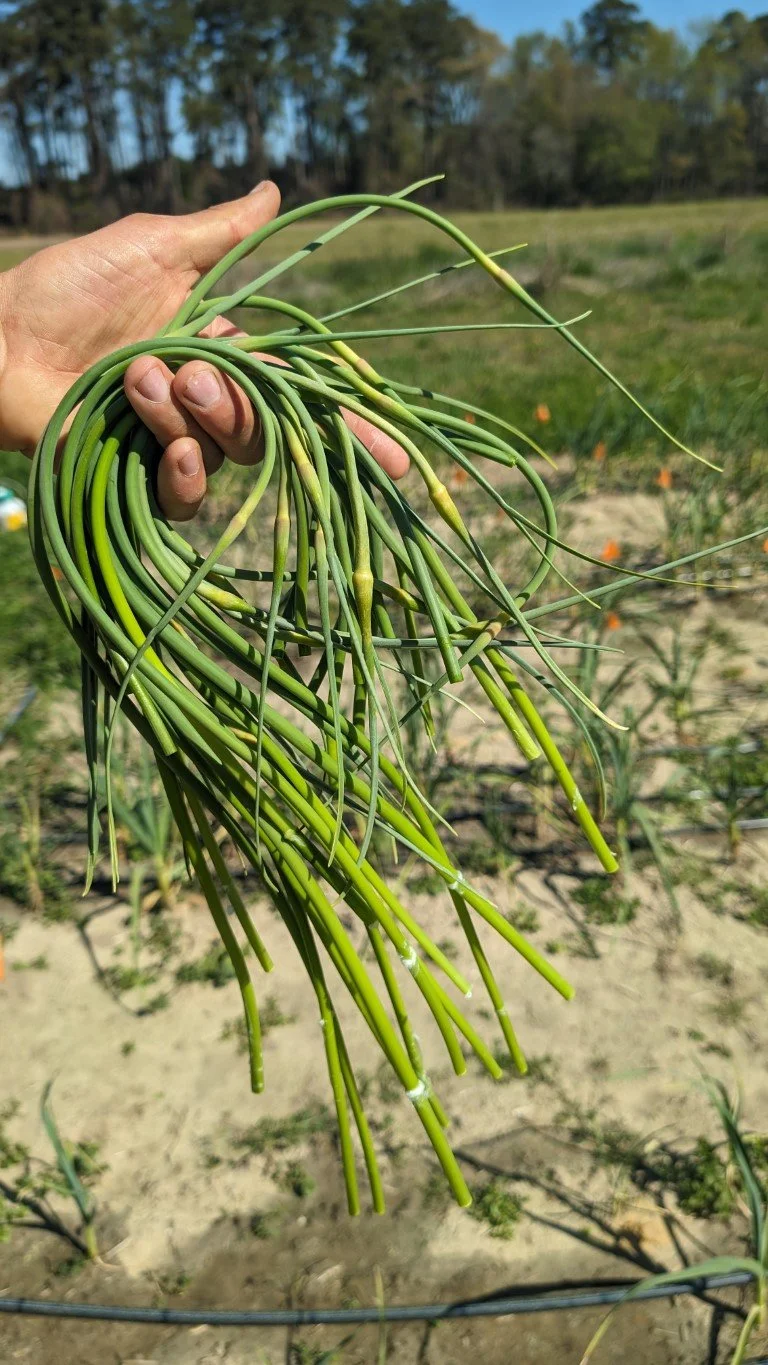
Freshly harvested garlic scapes
Commercially available varieties of garlic are often considered to be of two main types: hardneck and softneck. Hardneck varieties are known for their production of garlic scapes, a valuable secondary crop, while softneck varieties are typically favored for their longer storage life and larger bulb yields. Hardneck varieties are known to be more cold-hardy and as a result are recommended to growers in the Northern United states, but both hard and softneck varieties grow well in Virginia.
Garlic research at VSU is focused on identifying which commercially available varieties produce high quality and high yields of both scapes and bulbs in Virginia. Research is also focused on identifying planting practices which result in the best yields and limit pest problems, and which harvest practices can result in high-quality scapes for market. Bringing in specialty tools designed in China for scape harvesting allows for the harvest of the most sought after tender lower sections of scapes.
Turmeric
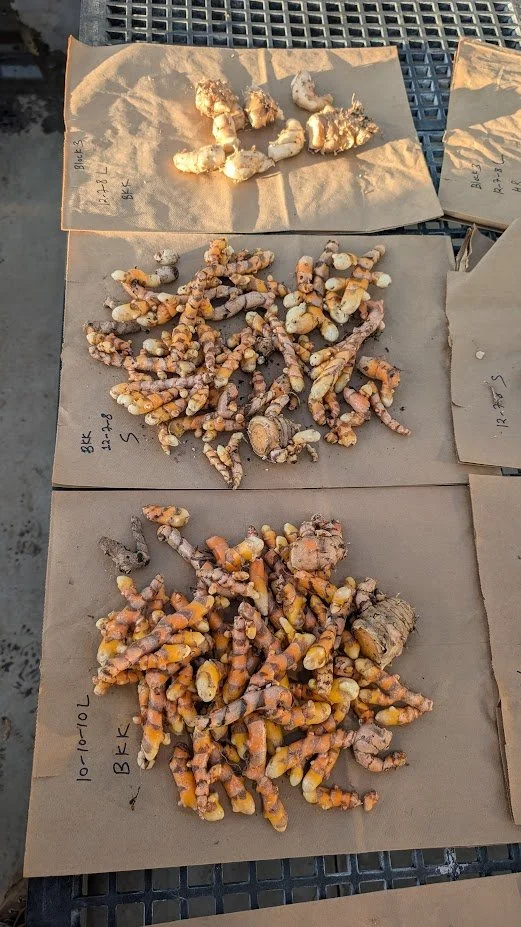
Turmeric grown under different fertilizer regimens at VSU’s Randolph Farm
Turmeric is a widely used spice known for its vibrant golden color and distinctive earthy flavor. A key ingredient in many traditional dishes found throughout Asia and Africa, turmeric is an important part of Virginia’s growing globally inspired cuisine. Native to southern Asia, turmeric thrives in tropical and subtropical climates with warm temperatures and high humidity. Growing turmeric in Virginia presents challenges due to the state's relatively cool winters and shorter growing season. However, with the use of high tunnels or greenhouses, it is possible to extend the growing season and create the humid environment that turmeric requires. Despite these challenges, the growing interest in local, sustainable produce presents an opportunity for small-scale farmers in Virginia to cultivate turmeric, providing fresh, high-quality turmeric to local markets.
At VSU we’re working to determine which varieties of turmeric grow best in Virginia. We’re also conducting research to determine which fertilizers and fertilization methods work best for turmeric because it is such a long season crop and heavy feeder. VSU and Virginia farmers are collaborating to identify methods to grow high quality turmeric for Virginia markets and VSU is collaborating with other universities to explore the possibility of tissue culturing turmeric to produce standardized variety seed lines and virus free seed for the American market.
Other specialty crops
VSU’s horticulture team has conducted research on a wide variety of other specialty and ethnic crops which include crops traditionally grown in Virginia like tomatoes, blueberries, grapes, watermelon, eggplant, peppers, cole crops and leafy greens, and crops not traditionally grown in Virginia which may offer opportunities for new markets for Virginia farmers, like bitter melon, luffa, Malabar spinach, taro, winter melon, and other specialty melons.
COnnect
e-newsletter
Sign up to receive our weekly e-newsletter and event alerts directly to your inbox.
